
The Best Handgun Ammo for Every Situation in 2025
Handgun ammo is the heart of your firearm’s performance, turning every trigger pull into reliable, repeatable power. At its core, each round combines a primer, propellant, and bullet inside a brass or steel case, igniting in a split second to send the projectile downrange with consistent speed and accuracy. Choosing the right load—like a light recoiling 9mm for practice or a flat-shooting .357 Magnum for defense—lets you match your ammo Rifle Ammo for Sale to your exact shooting needs. Just always feed your gun with fresh, quality cartridges and store them in a cool, dry spot to keep their punch ready every time you shoot.
What to Look for When Buying Rounds for Your Sidearm
When buying rounds for your sidearm, prioritize bullet weight and velocity to match your pistol’s intended role—lighter loads for competition, heavier for defense. Check the cartridge case material: brass reloads smoothly, while nickel-plated cases resist corrosion in concealed carry. Always verify the primer type; for striker-fired guns, use firmly seated, flush primers to prevent light strikes. Select jacketed hollow points for reliable expansion and feeding, avoiding flat-nosed or lead rounds in modern pistols with feed ramps. Test a box of your chosen ammunition brand for function and point-of-impact shift before stocking up. Finally, confirm the grain count cycles your recoil spring correctly—too weak or snappy loads can cause malfunctions.
Matching Bullet Weight to Your Pistol’s Twist Rate and Recoil Spring
Your pistol’s barrel twist rate dictates optimal bullet weight stability; a slower 1:16 twist favors lighter 115-grain loads, while faster 1:10 twists stabilize heavy 147-grain subsonics. Mismatched weights cause keyholing or erratic accuracy. Simultaneously, match bullet mass to your recoil spring’s rated force—lighter bullets produce less slide velocity, risking failure to eject with a heavy 18-lb spring, whereas 147-grain rounds need a stiffer spring to prevent premature unlocking and battering. Test your spring’s compression against the cartridge’s pressure curve; a 124-grain middleweight often balances both variables. Always verify factory specifications, then chronograph your results.
Match bullet weight to twist rate for stabilization and to recoil spring weight for reliable cycling—test 115, 124, and 147 grains to find your pistol’s harmony.
Why Jacket Type Matters: Full Metal Jacket vs. Jacketed Hollow Point
The jacket type dictates your round’s terminal behavior. Full metal jacket (FMJ) rounds feature a sealed lead core, promoting deep penetration and reliable feeding for range practice, but they often pass through threats without expanding. Conversely, a jacketed hollow point (JHP) uses a cavity to initiate rapid expansion upon impact, transferring maximum energy and reducing over-penetration risk. For personal defense, JHPs are the clear choice; for economical training, FMJs win. *The nuance lies in your firearm’s reliability with JHPs, as some barrels may choke on their profile.* Choose based on your primary use-case, not hype.
| Aspect | Full Metal Jacket | Jacketed Hollow Point |
|---|---|---|
| Primary use | Target practice, drills | Self-defense, duty |
| Expansion | None | Predictable, wide |
| Penetration | High, often exits | Moderate, stays in target |

How to Pick the Right Caliber for Self-Defense vs. Target Practice
Standing at the counter, I watched a new shooter grab a box of .40 S&W for the range, and I had to step in. For target practice, you want low recoil and cheap rounds, so a 9mm lets you shoot hundreds without flinching or burning cash. But when I carry at night, I switch to .380 ACP with quality hollow points—not because it’s powerful, but because I can place rapid, accurate shots in a dark hallway. The truth is, choosing a self-defense caliber means prioritizing bullet expansion and penetration over muzzle energy, while practice demands consistency and comfort. If you train with a snappy .357 Magnum, you’ll develop a flinch that ruins your draw. Match your carry gun to your practice gun, then pick the lightest load that still cycles reliably.
Comparing 9mm, .40 S&W, and .45 ACP for Stopping Power and Control
The eternal debate over **9mm vs .40 S&W vs .45 ACP for stopping power** hinges on a trade-off between bullet diameter, recoil, and shot placement. The .45 ACP delivers a larger wound channel and deep penetration, but its heavy recoil slows follow-up shots. The .40 S&W offers a middle ground—more energy than 9mm—yet its snappy kick can compromise control for less experienced shooters. The 9mm, loaded with modern defensive ammunition, provides adequate penetration, higher magazine capacity, and notably softer recoil, enabling faster, more accurate double taps. For most defenders, the 9mm’s balance of controllable speed and terminal performance outshines the others in real-world scenarios.
Q: Which caliber offers the best balance for stopping power without losing control?
A: The 9mm. Modern hollow points achieve reliable expansion, and its mild recoil allows you to place multiple shots on target quickly—a decisive factor for stopping a threat.
The Role of Bullet Velocity and Energy Transfer in Terminal Performance
In self-defense handgun loads, bullet velocity dictates the hydraulic displacement and temporary cavity within tissue, yet energy Ammunition for Sale transfer alone doesn’t guarantee incapacitation. A 9mm at 1,150 fps transfers roughly 400 ft-lbs, but penetration depth and permanent stretch cavity—driven by bullet expansion and sectional density—matter more than raw energy. Lower-velocity rounds like .45 ACP (850 fps) rely on larger frontal area to crush tissue, while high-velocity loads (e.g., 10mm at 1,300 fps) risk over-penetration if energy dumps before full expansion. For target practice, velocity consistency affects point-of-impact and recoil management, not terminal effects. Practical choice: match velocity to expansion threshold—too slow fails to open, too fast fragments without deep wound channel.
Terminal performance hinges on velocity-driven energy transfer balancing penetration and expansion, not sheer power.
Understanding the Mechanics Behind Reliable Feeding and Extraction
Reliable feeding in a handgun begins with the cartridge’s overall length and case mouth geometry, as these dictate how the round aligns with the feed ramp under spring tension. Extraction mechanics hinge on the extractor claw’s grip on the rim and the ejector’s timing, both of which depend on the case rim’s thickness and shape—a deformed rim causes slippage, leading to stovepipes. For ammo, the critical variable is consistent bullet seating depth and a proper crimp; an over-crimped case can allow the bullet to push back into the case during feeding, shortening the cartridge and causing a misfeed.
A slightly rough feed ramp can be overcome by using ammunition with a rounded profile, like a JHP with a smooth jacket, rather than a flat-nosed round.
Always verify that your handgun’s extractor tension matches the specific case hardness of your chosen ammo brand, as softer brass can cause premature ejection.
How Case Shape and Rim Design Affect Magazine Fit and Ejection
The case’s rim design directly dictates how rounds stack in a magazine, with semi-rimmed and rimless cases using the extractor groove 7mm-08 Ammo for Sale to seat against the feed lips, while a pronounced rim on revolver-style ammo (e.g., .38 Special) will catch on the front edge of a pistol magazine, causing misfeeds. A tapered case, like the 9mm’s slight cone, aligns the round’s nose upward during the feed ramp phase, but an overly straight wall (e.g., .40 S&W) increases friction against the magazine’s inner walls, slowing the slide’s stripping action. During ejection, a wide rim or sharp shoulder can snag on the ejection port’s lower edge if the extractor fails to hold the case tightly at the correct angle. *Even a 0.5mm difference in rim thickness can alter how the case tilts under the extractor’s claw, changing the port’s clearance timing.*
Case shape (taper and wall straightness) and rim dimensions (width and cut) control magazine seating depth, feed lip contact, and the pivot point for ejection—mismatches here cause rim-lock, nose-dive, or stovepipes.
Why Primer Sensitivity and Powder Burn Rate Influence Misfires
Primer sensitivity and powder burn rate are the twin arbiters of whether your handgun roars or merely clicks. A hard, military-spec primer cup—common in surplus ammo—demands a decisive striker impact, and if your firearm’s spring has weakened or the firing pin channel is fouled, that marginal strike fails to detonate, producing a misfire. Conversely, powder burn rate directly dictates pressure curve consistency: a slow-burning powder in a short barrel may not reach peak pressure before the bullet leaves, leaving unburnt flakes and a weak, unreliable ignition that can stall the slide. Even a perfectly struck primer won’t save a round if the powder’s burn characteristic mismatches the barrel length and bolt mass. Fast powders, though reliable in compact pistols, can spike pressure with a sensitive primer, causing a hang-fire or, worse, a slam-fire. Match your ammo’s primer and powder profile to your gun’s action timing for zero malfunctions.
Practical Tips for Storing and Handling Your Cartridges Safely
Keep handgun ammo in its original box or a sturdy, dedicated ammo carrier to prevent primers from getting dented during transport. Store it in a cool, dry place, ideally below 75°F and away from humidity, since moisture can corrode brass and cause misfires. When loading magazines, always inspect each round for dents or loose bullets, and never force a cartridge into a chamber—if it resists, stop and check the firearm. **Rotate your carry ammo** every six months to avoid powder degradation, but leave defensive rounds unchambered until the moment you need them. Always wash your hands after handling older ammunition, as lead residue can transfer. *Q: Can I store loose handgun rounds in a plastic bag?* A: No—moisture traps inside the bag, promoting corrosion; use sealed, desiccant-lined containers instead.
How Temperature and Humidity Over Time Can Degrade Propellant and Seals
Heat and humidity are the quiet enemies of your handgun ammo. Over months, warm air pushes moisture past the case mouth and primer, where it attacks the propellant’s stabilizers, turning powder into weak, inconsistent burners—your rounds lose velocity or fail outright. Meanwhile, that same dampness rusts the brass and swells the primer seal, cracking the waterproofing that keeps the round fresh. Even a “dry” garage can cycle daily humidity swings that breathe moisture in and out of your cartridges. To fight this, keep ammo in a sealed container with desiccant, avoid storing it near hot water heaters or exterior walls, and check your seals annually. Temperature cycling breaks down seal integrity fastest, so aim for a stable, cool spot.
- High heat accelerates chemical breakdown of nitrocellulose in the propellant, shortening shelf life.
- Humidity rusts the case wall and weakens the primer’s crimp seal, inviting moisture inside.
- Repeated warm/cold cycles cause the bullet to “walk” out of the case neck, breaking the seal.
- Storing in a cool, stable closet (55–65°F) with silica gel dramatically slows both issues.
Reading Headstamps and Lot Numbers to Avoid Old or Mixed Ammo
Before loading your magazine, read the headstamp and lot number to avoid old or mixed ammo. The headstamp reveals the manufacturer, caliber, and sometimes the year of production, letting you instantly spot mismatched rounds that could cause pressure spikes or feed failures. A lot number, often printed on the box, identifies the exact production batch, so you can confirm every cartridge shares identical primers, powder, and bullet weight. Never combine loose rounds from different boxes; if 7mm WSM Ammo for Sale a lot number is missing or illegible, treat that ammunition as suspect and set it aside for inspection or disposal. Consistency is your safety net.
- Check headstamps for same caliber and manufacturer before loading each magazine.
- Match lot numbers on boxes to ensure identical powder and primer performance.
- Discard rounds with worn, unreadable headstamps or no lot traceability.
- Separate mixed ammo immediately to prevent accidental use in a defensive situation.
Common Mistakes Shooters Make When Choosing Rounds and How to Avoid Them
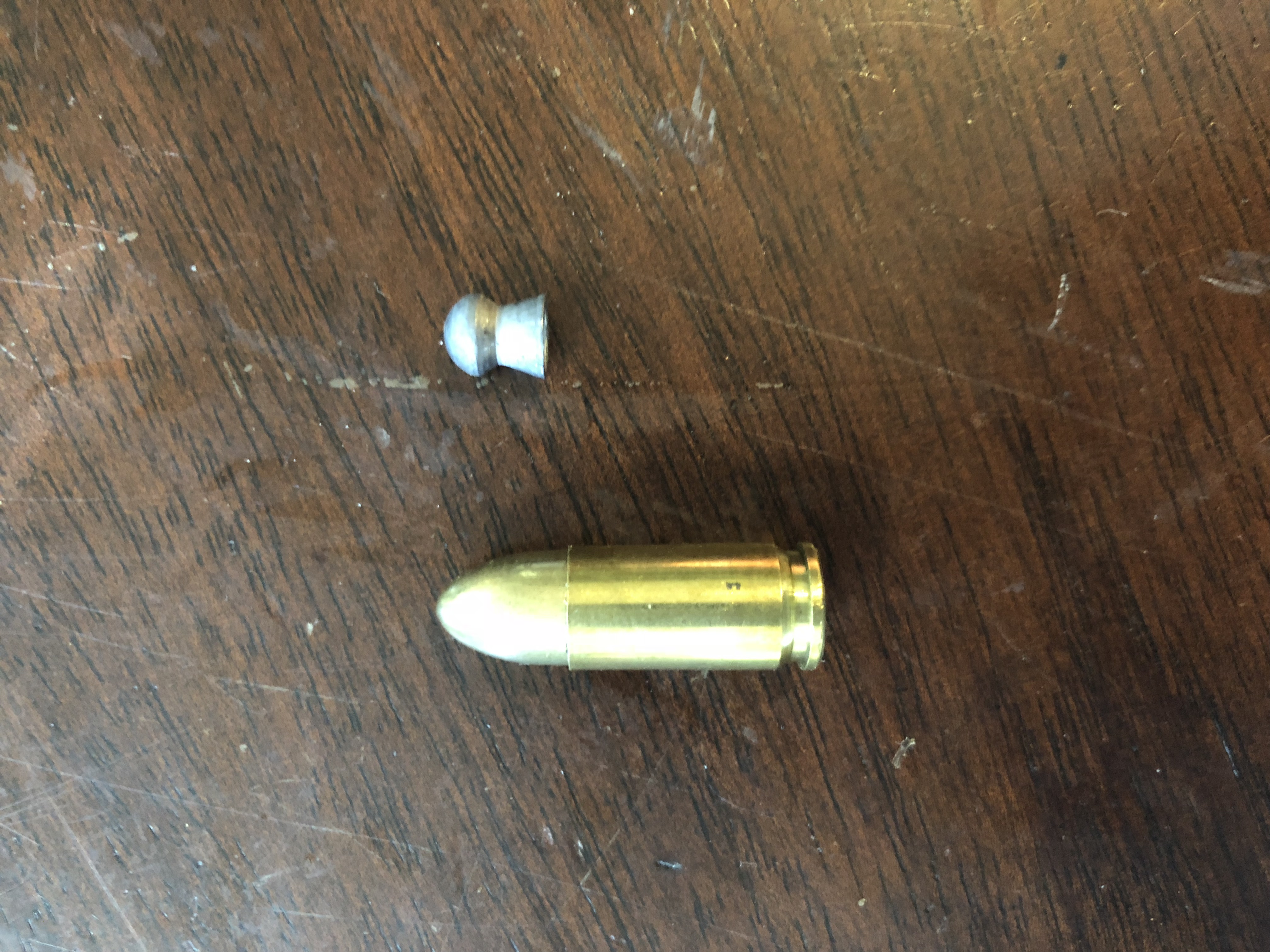
Picking handgun ammo by brand loyalty or box art is a classic mistake, since pressure and velocity vary wildly between lots. Another specialty sports blunder is ignoring your gun’s barrel twist and length—a round that’s accurate in a 5-inch barrel can keyhole out of a 3-inch compact. To avoid this, test several bullet weights (like 115 vs 147 grain) in your exact firearm, checking for point-of-impact shifts and feeding reliability. Never assume “+P” means better—it often accelerates wear and recoil without improving your shot placement. Q: Why does my chosen round jam every third magazine? A: You probably skipped the plunk test—chamber a snap cap to confirm the overall length fits your mag and throat. Stick with one reliable load for both practice and carry, then buy in bulk from the same lot to keep performance consistent.

Buying Cheap Practice Loads That Don’t Mimic Your Carry Load’s Point of Impact
Cheap practice ammo often prints to a different point of impact than your defensive rounds, silently training you to miss under stress. If your carry load shoots two inches low at seven yards, blasting thousands of full-metal jackets that hit bullseye will wire your brain to expect a false zero. Mimicking your carry load’s Rimfire Ammo for Sale point of impact is non-negotiable for realistic reps. Before buying bulk, compare bullet weight and velocity specs. Then test three boxes of your chosen practice load at your typical defensive distances—five, seven, and ten yards—and measure the shift.
- Shoot a five-shot group with your carry ammo and mark the center.
- Shoot the same group with the practice load, noting the offset.
- Choose only the practice round that keeps the offset under one inch, or adjust your sights for practice and revert before carrying.
Otherwise, you’re paying for confidence you don’t actually have.
Overlooking Recoil Sensitivity and Grip Technique When Testing New Loads
When evaluating handgun ammo, a common error is blaming the cartridge for flinching that actually stems from poor grip mechanics. Before dismissing a load as too snappy, verify your support-hand pressure is firm and your wrists are locked. Overlooking recoil sensitivity means you may misinterpret muzzle rise as excessive power, when a corrected high-thumbs grip would tame it. To isolate the ammunition variable, follow this sequence:
- Shoot a known mild load to establish a baseline group.
- Switch to the new load without altering your Shotgun Ammo for Sale grip.
- Compare groups—if both open up equally, your technique, not the round, is the flaw.
Mastering recoil management through grip tension prevents you from rejecting perfectly viable defensive rounds based on a fixable handling error.
What Your Firearm’s Manual Says About Barrel Length and Ammo Performance
Your firearm’s manual specifies a tested barrel length for a reason: it directly affects how handgun ammo performs. A shorter barrel, like a 3-inch compact, yields lower muzzle velocity than the 4- or 5-inch barrel the manual’s ballistics tables assume, so your point of impact may shift due to slower bullet flight. The manual’s recommended ammunition grain weights are calibrated for that barrel length, meaning a lighter or heavier load than specified can produce inconsistent pressure and unreliable cycling. Even a half-inch difference in barrel length can alter expansion thresholds for defensive hollow points, so verify your actual barrel against the manual’s testing data before trusting stated energy figures. Always follow the manual’s barrel-length-specific warnings—some rounds are designed for longer barrels and may fragment poorly from a snub-nose. Use the manual’s velocity chart to estimate real-world drop at distance. Match your carry ammo to the manual’s listed test barrel for reliable performance.
How to Use Velocity Drop in Short Barrels to Pick a More Consistent Load
To use velocity drop in short barrels for load consistency, chronograph each candidate cartridge from your actual firearm—not from a test barrel. Record the standard deviation 6.5 PRC Ammo for Sale (SD) across 10-shot strings; lower velocity variability directly translates to more consistent point of impact in compact slides. Select loads where the average muzzle velocity remains above 950 fps, as slower rounds exhibit erratic expansion and greater vertical dispersion. Compare two loads with similar bullet weights: the one with the smaller extreme spread (ES) between shots is your precision baseline. Confirm this by shooting groups at 15 yards; if the velocity ES exceeds 40 fps, discard the load, as barrel length magnifies minor powder inconsistencies.
Testing for Pressure Signs and Accuracy at Various Distances
Testing for pressure signs and accuracy at various distances is the only way to validate a barrel length and ammunition pairing. Begin at 7 yards, firing five-round groups, while scrutinizing each spent case for flattened primers, ejector swipe marks, or cratered firing pin impressions. If these appear, the load is overpressure for that specific barrel, regardless of what the manual claims. Then move to 15 and 25 yards, noting group expansion—a cartridge that shoots tight at 7 yards but opens up beyond 15 reveals a velocity or stability mismatch tied to barrel length. *A chronograph is indispensable here, as pressure signs often precede visible accuracy loss by several hundred feet per second.* Always measure case rim expansion Handgun Ammo for Sale with calipers; if it exceeds spec by 0.004 inches, stop testing immediately.
**Q: How do I distinguish normal pressure from dangerous pressure during accuracy testing?**
A: Compare fired cases against factory new ones—if primer pockets loosen or case heads 6.5 Creedmoor Ammo for Sale show measurable growth beyond 0.001 inch, that’s a definitive pressure red flag, not just an accuracy variable.